
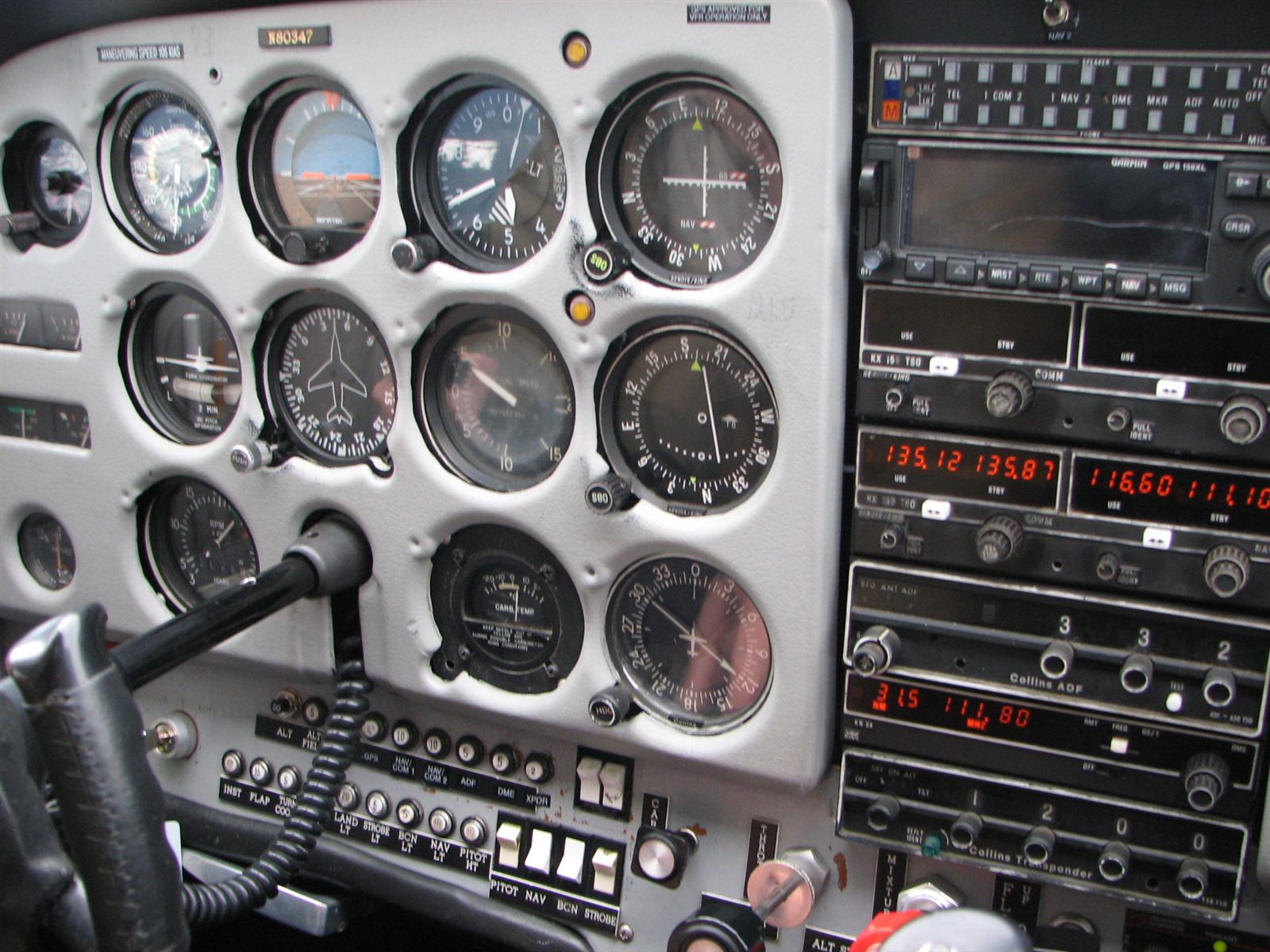
Ask a Kenyan student pilot what they would do if their engine failed after takeoff and you get a fluent answer, drilled since the first weeks of training. Ask the same student what they would do if the radio simply died, no smoke, no rough running, just silence on a frequency that was chattering a minute ago, and the answer gets vague fast.
That gap matters because a dead radio is not rare and not, by itself, an emergency. It is a known condition with a known procedure, and the procedure is worth actually rehearsing rather than filing under "read it once in ground school."
The Short Version
- A total radio failure is a NORDO condition, not a MAYDAY. Kenya's Rules of the Air treat it as a standard, nameable procedure with its own rule, not as a declared emergency.
- Under VFR, the requirement is simple: stay in visual conditions, fly to the nearest suitable aerodrome, land, and report your arrival to air traffic services by the fastest means available once you are down.
- Squawk 7600 the moment you suspect a failure. It is the universal transponder code for lost communications and gives controllers a second, silent way to know something changed.
- Light signals from the tower are not a novelty item for the exam. At a towered field, they are the actual mechanism that clears you to land without a working radio.
- Receiver failure and transmitter failure are different problems with different correct responses, and most students have only ever been taught the total-failure version.
- The real danger is not the silence. It is a pilot who stops flying the aircraft properly while trying to fix a radio.
Work the checklist before you accept the failure
Most "radio failures" are not failures at all. The first and most common cause of a lost-comm scare is a volume knob bumped low enough to sound like silence, and the fix takes seconds once you know to look for it.
Industry flight-training guidance built around this exact scenario lays out a short troubleshooting sequence meant to run in under two minutes: check and raise volume, turn squelch off to listen for background hiss confirming the receiver is alive, try a known busy frequency to confirm reception generally, confirm you are actually tuned to the correct frequency, and if you carry a second radio or handheld, try that before assuming the worst (Boldmethod, "8 Things You Should Do If You Suspect A Radio Failure").
A bush operator flying into a strip without any tower is not immune to this either. Anyone who has read the case for carrying a handheld backup radio on Kenya's non-KCAA airstrips already owns the cheapest fix for exactly this scenario, provided it actually gets checked before departure rather than assumed to be there.
Only once that short checklist is exhausted, with no result, should you actually treat the situation as a genuine radio failure and move to the procedure below.
Two different failures, two different correct responses
Most Kenyan ground school covers "radio failure" as one scenario: total silence, both directions. In practice it usually is not that clean, and the distinction changes what you should do next.
Transmitter failure means you can still hear ATC but they cannot hear you. Here the correct response is to listen and comply with anything you receive, and to assume instructions are meant for you if the context and timing make that obvious, while backing up your position with light signals or transponder code as available.
Receiver failure means you can still transmit but cannot hear anything back, and this is the one most pilots have never been drilled on. The standard convention, echoed in ICAO-derived regional rules such as Europe's blind-transmission procedure, is to keep transmitting your position reports at their normal scheduled points, prefaced with the phrase that tells anyone listening exactly what is happening: "transmitting blind due to receiver failure," followed by the full message, a repeat of it, and the time of your next intended call (EASA Community, on SERA.14085, use of blind transmission).
That habit matters even if you are not sure which failure you have. Your transmitter may well be working even when your receiver clearly is not, so keep making your normal calls rather than going silent because you assume nobody can hear you.
What Kenya's Rules of the Air actually require
This is not an improvised response left to individual judgement. Kenya's Civil Aviation (Rules of the Air) Regulations, 2018, Legal Notice No. 124, sets out the domestic procedure, built on the ICAO Annex 2 framework that every ICAO contracting state, Kenya included, implements.
For an aircraft in visual meteorological conditions that loses two-way radio communication, the regulation is direct: continue to fly in visual meteorological conditions, land at the nearest suitable aerodrome, and report the arrival by the most expeditious means to the appropriate air traffic services unit. Instrument flight rules operations fall under a separate, more involved procedure, which matters less for the VFR training environment this site covers but is worth knowing exists if your syllabus later takes you into instrument work.
Read that VFR text again and notice what it does not say. It does not say declare an emergency. It does not say request priority handling as a matter of course.
It says fly the aircraft, find the nearest sensible place to land, put it down, and tell someone once you are safely there. That is a workflow, not a crisis response, and treating it as the latter is where most of the anxiety around this scenario comes from.
Squawk 7600, then watch the tower
If your aircraft carries a transponder, set it to 7600 the moment you have confirmed a genuine failure. This is the universal ICAO code for lost communications, defined under the same Annex 10 framework that governs the emergency codes 7700 and 7500, and it works independently of whether your voice transmission is getting through at all.
Within Kenya's controlled airspace, a controller watching a radar return that squawks 7600 knows immediately what they are dealing with, even before any light signal is exchanged or any blind call is heard. That silent confirmation buys you the benefit of the doubt the moment your transponder changes code, which is exactly the point of the system.
Squawking 7600 does not fix your radio and does not replace the rest of the procedure. It is one part of a layered response: transponder code, blind transmissions if your transmitter still works, and visual signals once you are close enough to see them.
The signals nobody actually drills
Light gun signals exist for exactly this scenario and they are not an obscure exam topic. At a towered field like Wilson (HKNW), they are the real mechanism a controller uses to sequence and clear a NORDO aircraft without a single word of radio.
The meanings are standardised under the ICAO framework and are echoed identically in national aviation authority guidance worldwide, which is the entire reason the system works the same at any towered field on the planet.
The critical habit to build is where you look. A controller cannot help a NORDO aircraft that is not flying a predictable, expected pattern, which is why the procedure works best when you fly the published circuit exactly, hold your position in the sequence, and keep your eyes on the tower cab, not buried in the panel trying to fix an already-dead radio.
Landing NORDO at a busy field like Wilson
Wilson is not a quiet grass strip. It is one of East Africa's busiest general aviation aerodromes, and a NORDO arrival there needs to be conservative and predictable rather than clever.
Fly a normal circuit entry, at circuit height, and join in a way any other traffic and the tower would expect from a radio-equipped aircraft. Watch the tower continuously from the point you are established, because a light signal given once may not be repeated on a busy frequency day.
A steady red on downwind means exactly what it says: give way and keep circling, not "try again in a minute and see if it changes on its own." Do not turn base or final until you have an unambiguous steady green, and if you are not certain what you were shown, the safe assumption is that you have not been cleared.
Squawk 7600 before you enter the pattern, not after you are already established in it, so controllers have the maximum possible warning before you are close enough to need light signals at all.
Aviate, navigate, communicate, in that order
The order of priorities taught from the first week of flight training exists precisely for moments like this one. Flying the aircraft comes first, working out where you are and where you are going comes second, and communication is deliberately last, because it is the task most safely delayed under pressure (AOPA, "Mentor Matters: Aviate, Navigate, Communicate").
A dead radio inverts the instinct in a lot of students. The natural reaction is to fixate on the panel, cycle through frequencies, and try increasingly creative fixes while the aircraft itself gets less attention than it did thirty seconds earlier.
That is backwards, and it is worth saying plainly. A radio problem has never once caused a landing accident on its own; a distracted pilot flying an unstable approach while wrestling with a dead radio has caused plenty. Fly the airplane first. The radio is the third priority for a reason, and a genuine failure does not upgrade it to first.
Frequently asked questions
Is a radio failure something I need to declare as an emergency?
No. Kenya's Rules of the Air treat total loss of two-way communication in VFR conditions as a defined, standard procedure, not a distress or urgency condition in itself. You may still upgrade to a PAN-PAN or MAYDAY if a separate genuine emergency develops alongside it.
What is the very first thing I should do if I suspect my radio has failed?
Work a short troubleshooting check before accepting the failure: volume, squelch, correct frequency, a second radio if fitted, and a busy known frequency to confirm reception. Most "failures" resolve inside that check.
Do I need a transponder for this procedure to work?
No, but it helps enormously. Squawking 7600 gives controllers a silent confirmation independent of light signals or blind transmissions, and it costs nothing to set the moment you suspect a genuine failure.
What if I cannot tell whether my transmitter, my receiver, or both have failed?
Keep transmitting your normal position reports as if your transmitter is working, since it likely is even if you hear nothing back. Watch for any sign of a response, including a change in traffic behaviour or a light signal, and treat the tower's light gun as your primary channel once you are close enough to see it.
Should I practise this before it happens for real?
Yes, and ask your instructor directly rather than waiting for it to appear in the syllabus unprompted. A full circuit flown genuinely by light signals, briefed with the tower in advance, teaches a different skill than reading the signal meanings off a page.
Key Takeaways
- A total radio failure is a defined VFR procedure under Kenya's Rules of the Air, not an automatic emergency: stay in VMC, land at the nearest suitable aerodrome, report your arrival afterward.
- Work a short troubleshooting check, volume, squelch, frequency, second radio, before you accept the failure as genuine.
- Receiver failure and transmitter failure need different responses. If you can still transmit, keep making blind position reports rather than going silent.
- Squawk 7600 immediately, then treat the tower's light gun as your real channel once you are close enough to see it.
- Aviate, navigate, communicate stays the order even when the failure is the radio itself. Fly the aircraft first.
AngaBrief's pre-flight assessment records the equipment carried for a given flight, transponder and any backup radio included, which is exactly the detail that shapes which of these options is actually available to a pilot on the day. It is a training and decision-support tool, not a dispatch authority, and the go or no-go decision on any given flight stays with the Pilot in Command and their instructor.