You are downwind at Wilson on a clear Saturday morning. Your instructor is quiet, the sky is empty, and you have just completed the pre-landing checks with your head inside the cockpit for what felt like a few seconds. You look up, see nothing, and carry on.
The sky was not empty. You simply had not yet found what was in it.
Every Kenyan pilot is taught to "see and avoid". Few are taught how often that principle fails even when everyone is doing their best.
The Short Version
- Under visual flight rules, collision avoidance depends largely on your eyes, and investigators have long warned that this has serious limits.
- Most mid-air collisions happen near airports, in good weather, between pilots who were looking out and still did not see the other aircraft in time.
- Your eyes work best when you scan in deliberate, short pauses rather than sweeping, and when you give them something distant to focus on.
- A target that stays in the same place in your windscreen and grows is the one to worry about.
- Radio calls and traffic awareness add to your scan. They never replace it.
What investigators have said about see-and-avoid
The Australian Transport Safety Bureau (ATSB) inherited a landmark research report from its predecessor, titled Limitations of the See-and-Avoid Principle. Its central conclusion is blunt: the principle, in the absence of traffic alerts, is subject to serious limitations. A copy of the report is held by SKYbrary, the aviation safety knowledge base.
The reasons are human, not a failing of any particular pilot. Human visual capability, cockpit workload and environmental conditions all conspire against you. A distant aircraft presents a tiny visual angle until shortly before impact. Background clutter can hide it. The report also notes that workload reduces the time pilots spend scanning for traffic, and that even when pilots are looking outside there is no guarantee other aircraft will be sighted.
Later investigations still lean on this finding. In its 2025 report on a mid-air collision between two helicopters during aerial mustering, the ATSB noted that these limits are well understood and covered in numerous investigations (report AO-2024-044). After a 2015 mid-air collision near Fort McMurray in Alberta, the Transportation Safety Board of Canada found that neither pilot saw the other aircraft in time to avoid the collision.
None of this is an argument for giving up on looking out. It is an argument for being honest about what your eyes can and cannot do, and for building a routine around that.
Where it goes wrong: near the aerodrome, in good weather
The Aircraft Owners and Pilots Association (AOPA) Air Safety Institute has studied mid-air collisions in the United States. Its figures are older, so treat them as a pattern rather than a current statistic. It found that 49 percent of mid-airs occurred in the traffic pattern or during approach or departure, and that in the study, around 80 percent of collisions during normal flight activities happened within ten miles of an airport. Of the collisions in the pattern, most were at airports without a control tower.
The US Aeronautical Information Manual makes a related point, reported in the same literature: a high percentage of near mid-air collisions occur below 8,000 feet above ground level and within 30 miles of an airport.
Translate that to Kenya. The places where traffic converges are the places you are trained to fly: the Wilson circuit, the departure and arrival routes around it, and the uncontrolled strips where there is no tower to sequence anyone. Our own article on joining the circuit at uncontrolled aerodromes covers the radio side. This article covers the eyes.
The Federal Aviation Administration (FAA) states the principle plainly in Advisory Circular 90-48E, Pilots' Role in Collision Avoidance: pilots bear the primary responsibility for collision avoidance through constant vigilance, regardless of flight rules or air traffic control services. The same circular points out that the speed and climb and descent rates of many aircraft produce high closure rates, which limits the time available for detection, decision and evasion. It is guidance rather than regulation, but the physics it describes does not care which country you fly in.
Why your eyes miss things
Three problems come up again and again in scanning guidance for student pilots.
1. Empty-field focus
When there is nothing to look at, such as a blue sky or a flat haze, the eye tends to relax to a short focal distance instead of focusing far away. Guidance varies on exactly how short, so do not memorise a number. The practical point is that you can stare straight at a distant aircraft and not see it. The usual remedy is to give your eyes a distant reference, such as the edge of a cloud or a ridgeline, before resuming the scan.
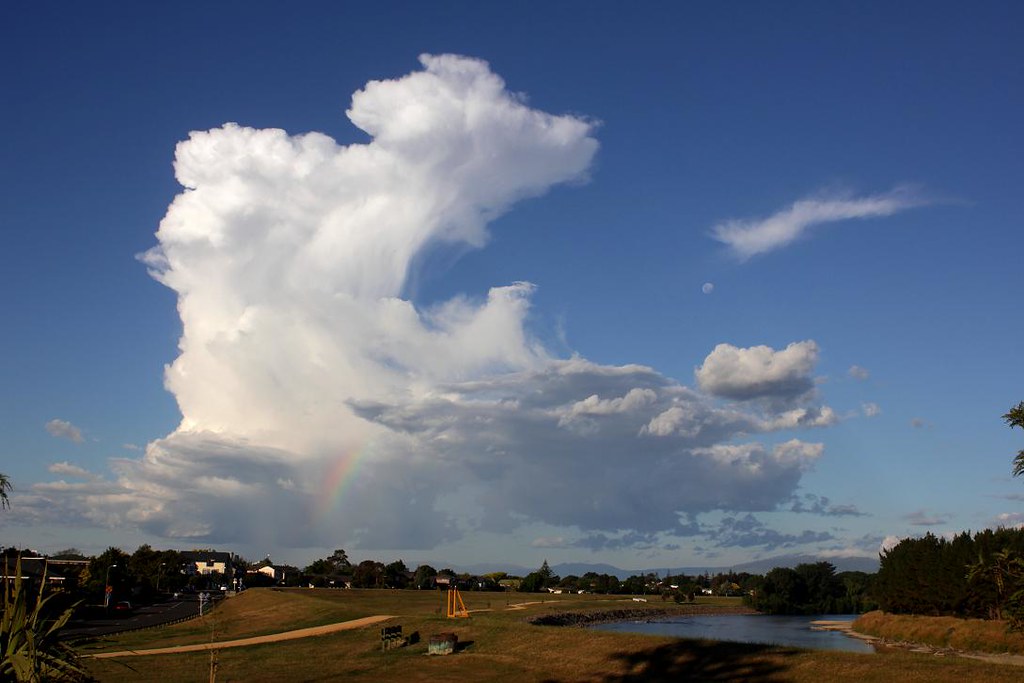
Over the Rift Valley or the plains south of Wilson, there is often a ridge or a build-up of cumulus to use. On a hazy day when the horizon disappears, you have fewer references, which is exactly when this matters most. Our piece on flying in dust and haze covers the wider picture.
2. Sweeping instead of pausing
The eye detects detail only when it is still. A smooth sweep across the windscreen feels thorough but can pass over a small target without registering it. Study guides for instructors commonly recommend short, regularly spaced eye movements of roughly 10 to 15 degrees, with a pause of at least a second on each block. Sources differ slightly on the exact figures and I could not check them against the FAA text itself, so use them as a starting point and ask your instructor what your school teaches.
3. Heads down at the wrong moment
The ATSB research found that workload cuts the time spent scanning. In training, workload peaks exactly where traffic is densest: configuring for the circuit, running checks, talking on the radio. Plan your heads-down tasks for the quiet moments, and make a habit of looking up and scanning before you turn, before you descend, and before you commit to the runway.
The target that does not move
The most dangerous aircraft in your sky is the one that does not seem to move. If another aircraft is on a collision course with you, it stays at the same position relative to your windscreen while it gets larger. Instructor guidance describes this as a target with no relative motion that appears to grow, and it is why a quick glance can mislead you. Something that is drifting across the windscreen is passing. Something that sits still is coming.
If you find a stationary target, do not wait to be sure. Your first action is to take it seriously, tell your instructor or the other crew member immediately, and manoeuvre according to the right-of-way rules covered in our article on who gives way.
Traffic awareness is a help, not a substitute
Radio calls from other pilots tell you where traffic says it is. They do not tell you about the pilot who is on the wrong frequency, has not yet called, or is lost. At an uncontrolled strip, a clear radio does not mean a clear circuit. Treat each call as a prompt about where to look, then look.
The ATSB has also warned that even when a pilot is alerted to another aircraft's position, seeing it can be hard. In a 2017 near-collision near Darwin, it observed that the occurrence highlighted the difficulty of see-and-avoid even with traffic information. So work from the call to the sky, not from the call to complacency.
A scanning routine you can practise
Adapt this with your instructor. It is a habit to rehearse, not a standard to quote.
- Clear before you turn. Look in the direction of the turn, and behind it, before you roll in. Do not let the nose block the area you are moving into.
- Scan in blocks. Move your eyes in short steps and pause on each, instead of sweeping. Cover the area from the horizon down to the nose, and include the sides.
- Reset your focus. If the sky is empty, find a distant cloud edge or ridge and look at it before you scan again.
- Check the quiet spots. Above, below and behind the wing. Know where your own aircraft blocks the view.
- Use the sun and the glare. If you are flying toward the low morning or evening sun, assume you cannot see everything and be more conservative with your spacing.
- Brief your passenger. A second pair of eyes helps only if you ask for them. A short, pre-flight request to call out any traffic they spot costs nothing.
- Protect your heads-down time. Finish checks before the busy part of the circuit, and do not start a new task while traffic is in sight.
What instructors and schools can do
If you are an instructor or a safety manager, three small changes cost nothing. First, teach scanning as a skill with its own debrief, not as a line in the pre-landing checks. Second, ask students to call out what they have seen ("traffic, two o'clock, high") during circuits so you can check their picture against yours. Third, brief the known pinch points at your aerodrome, such as joining points and shared approaches, so students know where to look hardest. Our article on crossing runways at Wilson looks at another place where traffic paths cross at Wilson.
Takeaways
- Investigators have described unalerted see-and-avoid as subject to serious limitations. Plan as if you will miss something, because sometimes you will.
- The highest-risk place is near the aerodrome and in the circuit, in good weather, when you feel most relaxed.
- Pause your eyes in short blocks, refocus on something distant, and watch for the target that does not move.
- Use radio calls as prompts for where to look, never as proof that the sky is clear.
- Check the figures in this article, and your school's own scanning standard, with your instructor before you rely on them.
AngaBrief is not a dispatch authority. Final go/no-go is the pilot's decision.