
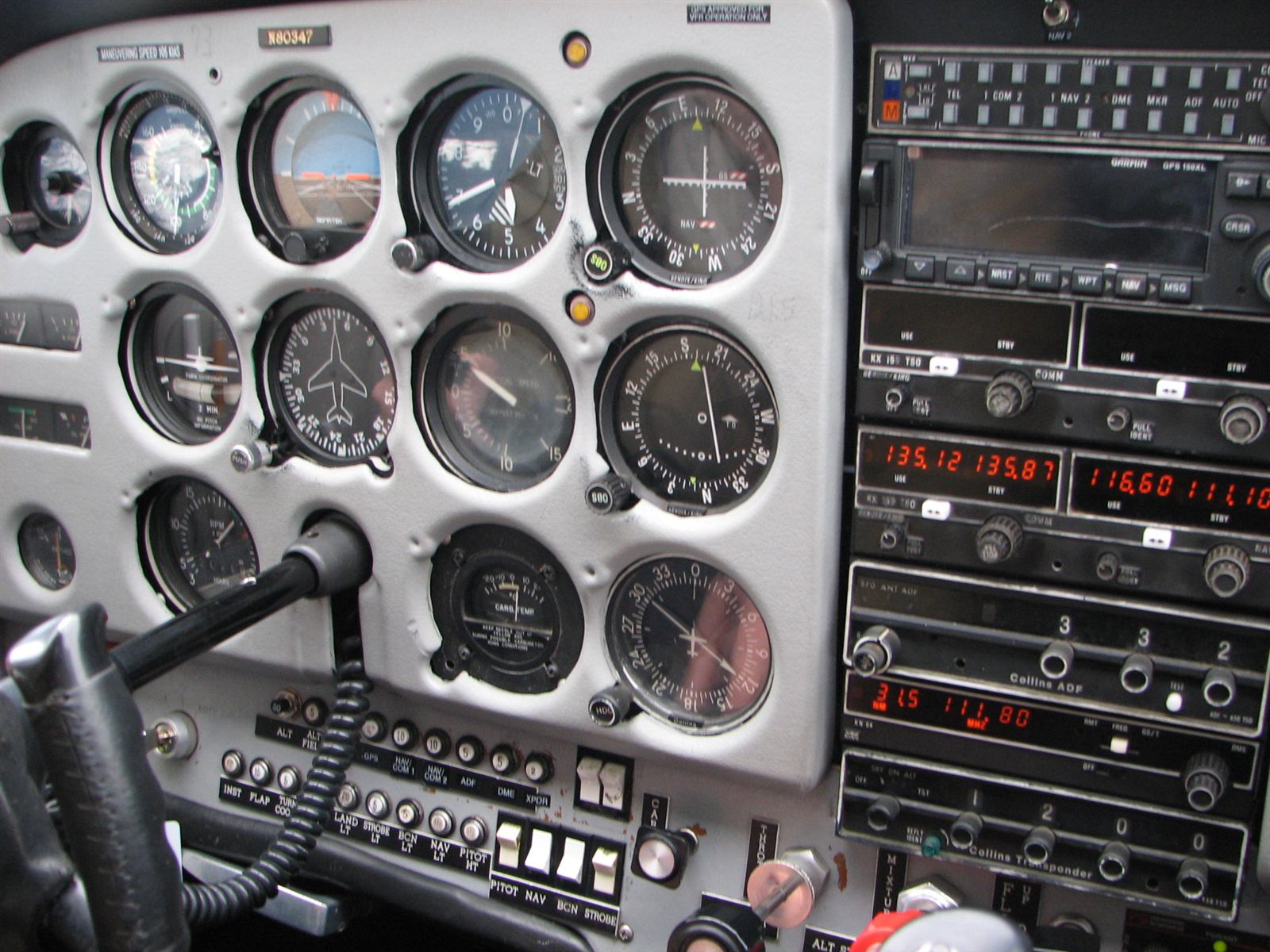
Ask a student pilot in Kenya whether hypoxia is something they need to worry about, and most will say no. They fly a C172 or a PA-28, not a pressurised turboprop climbing through FL200.
That answer misses something specific to where this training actually happens. Several of Kenya's own aerodromes, and the routine cross-countries flown out of them, sit closer to the altitudes where mild hypoxia begins than most syllabi admit.
The Short Version
- The FAA's own guidance treats 5,000 ft cabin altitude at night, and 10,000 ft by day, as the conservative point where supplemental oxygen starts to help a pilot's performance.
- Eldoret sits at 7,050 ft, Kericho at 7,165 ft, Nanyuki at 6,250 ft, and Wilson at 5,546 ft. A pilot doing circuits at any of those fields is already above the night-vision threshold before the engine starts.
- Mild hypoxia does not knock you out. It quietly narrows attention, slows reaction time, and dulls night vision, while leaving you convinced you feel fine.
- A cross-country that climbs to clear the Aberdares, the Mau escarpment, or terrain near Mount Kenya can sit for real time in the 10,000 to 14,000 ft band, in an aircraft that carries no oxygen on board.
- Kenya's own general aviation regulations put the duty on the pilot-in-command directly: keep enough breathing oxygen available for any altitude where its lack could impair the crew.
- The fix is not an oxygen bottle in a training C172. It is knowing the exposure exists and planning the route and the descent trigger before you need them.
Kenya's own aerodromes already sit inside the caution zone
The FAA's guidance on altitude and oxygen, laid out in AC 61-107B, Aircraft Operations at Altitudes Above 25,000 Feet MSL and/or Mach Numbers Greater than .75, also carries the FAA's broader hypoxia-awareness position that a conservative pilot uses supplemental oxygen above 10,000 ft during the day and above 5,000 ft at night, well below where United States federal regulation actually mandates it.
Look at that 5,000 ft figure next to a map of Kenyan training fields and the exposure becomes obvious. Wilson Airport, the country's busiest general aviation aerodrome, sits at 5,546 ft (SkyVector, HKNW).
Move upcountry and the numbers climb further. Nanyuki sits at 6,250 ft, Eldoret International at 7,050 ft, and Kericho at 7,165 ft (Nanyuki Airport; Eldoret International Airport; Kericho Airport).
A student flying a night circuit detail out of any of those three fields is, on the FAA's own conservative reasoning, already above the altitude where night vision measurably degrades, standing on the apron before the propeller turns. Add a normal 1,000 ft circuit height and Eldoret traffic pattern work happens above 8,000 ft MSL as a matter of routine, not as an exceptional event anyone briefs.
What "mild" hypoxia actually does
None of this is about the dramatic version of hypoxia. Loss of consciousness and single-digit time-of-useful-consciousness figures belong to flight levels a C172 or PA-28 will never reach, since both types have service ceilings around 14,000 ft.
The relevant version is milder and more insidious. The FAA's Airplane Flying Handbook, in its night operations chapter, is direct about the mechanism: the eye's rod cells, responsible for night vision, are especially oxygen-hungry, and a measurable deterioration in night vision shows up at cabin altitudes as low as 5,000 ft (FAA-H-8083-3C, Chapter 11).
Climb higher and the effects broaden. The FAA's Aeronautical Information Manual describes hypoxia in the 10,000 to 15,000 ft range as producing measurable impairment of judgement, memory, and reaction time, well before a pilot would describe themselves as unwell (AIM Chapter 8, Medical Facts for Pilots).
The FAA's dedicated hypoxia awareness page for pilots makes the same point in plainer language, aimed squarely at general aviation rather than airline crews (FAA, Beware of Hypoxia).
That last part is the trap worth sitting with. Fatigue impairs the organ doing the self-assessment; mild hypoxia does the same thing through a different mechanism, and pilots experiencing it reliably describe feeling fine right up until a debrief points out the mistakes.
The exposure a normal cross-country actually flies into
A circuit detail at a highland aerodrome is a mild, sustained exposure. A cross-country that has to cross real terrain is a bigger and more concentrated one.
Routes north from Wilson toward Nanyuki, Nyeri, or Meru pass close to or across the Aberdare Range, whose highest point, Mount Satima, reaches 4,001 m, or 13,127 ft. That range's terrain and mountain-wave hazard deserves its own read on its own terms; the altitude-physiology angle here is a separate, compounding hazard on the same routes, not a replacement for it.
Building a genuine terrain margin over ground that high, rather than skimming legal minimums, pushes a cruising altitude well into the 11,000 to 13,000 ft band for a meaningful stretch of the flight. A similar picture applies crossing the Mau escarpment on routes toward Kericho or the western highlands, and on any route that skirts the lower slopes of Mount Kenya.
None of those legs are exotic. They are ordinary syllabus cross-countries, flown in a training aircraft that, at almost every flying school in the country, carries no oxygen equipment at all.
What the regulations actually require, and where the gap sits
International general aviation standards give two useful reference points, and they are not quite the same number. The FAA's regulatory threshold, reflected in the guidance above, requires flight crew to use oxygen continuously once cabin altitude passes 12,500 ft for more than 30 minutes, and at all times above 14,000 ft, with oxygen offered to occupants above 15,000 ft.
ICAO's international general aviation standard is slightly more conservative: continuous crew oxygen use above 10,000 ft for more than 30 minutes, and above 13,000 ft at all times, with the same threshold applying to offering it to occupants (SkyBrary, Aircraft Oxygen Systems). A fully-loaded terrain crossing near the Aberdares can brush against that 13,000 ft figure directly.
Kenya's own Civil Aviation (Operation of Aircraft-General Aviation Aeroplanes) Regulations, 2018 puts the duty on the pilot-in-command in principle-based terms: ensure breathing oxygen is available in sufficient quantities for any altitude where its lack might impair the crew or harm passengers. That is a real, binding obligation, and it is also not a bright-line number a student can check against a chart the way they would check a demonstrated crosswind figure.
This is the actual gap. The regulation puts the judgement call on the pilot-in-command, the syllabus rarely names the specific altitudes at which that judgement should activate, and the training aircraft itself carries nothing to act on the judgement even if it does.
A self-check and briefing points that respect the physiology
Because mild hypoxia degrades the very judgement a pilot would use to notice mild hypoxia, the honest fix is a decision made on the ground, not one made at altitude.
- Know your route's actual altitude exposure before you fly it. Note any leg expected to sit above roughly 10,000 ft for more than a few minutes, the same way you would note a fuel-critical leg.
- Set a time-and-altitude trigger in the briefing, not in the air. If a route needs sustained cruise above 10,000 to 12,000 ft to clear terrain safely, decide in advance whether that is acceptable for this flight, or whether a longer route around the high ground is the better plan.
- Watch for the specific symptoms, not a vague feeling. Unusual fatigue that does not match the workload, slower or fumbled radio calls, and difficulty recalling the last few minutes of the flight are the practical, checkable signs, not "I feel a bit off."
- Treat night circuits at highland fields as already inside the caution zone. Extra margin on approach speed judgement and distance perception at night from Eldoret, Nanyuki, or Kericho is not overcaution, it reflects the FAA's own conservative threshold.
- Descend on suspicion, not on certainty. Because self-assessment is exactly what is impaired, a pilot who even suspects the effect should treat descending to a lower cruising altitude as the default action, not a last resort.
Frequently asked questions
Do Kenyan flying schools need to carry supplemental oxygen in a C172 or PA-28?
Kenyan regulation requires the pilot-in-command to ensure sufficient oxygen is available at altitudes where its lack could impair the crew, but it does not set a specific altitude table for light training aircraft the way the FAA's federal rule does. In practice this means the judgement, and the responsibility, sits with the school's operations procedures and the pilot-in-command for each flight.
Is hypoxia only a risk for night flying?
No. Night vision degradation is the effect that appears at the lowest altitude, around 5,000 ft, but daytime cognitive effects such as slower reaction time and impaired judgement appear from roughly 10,000 ft regardless of the time of day.
Can a C172 or PA-28 even reach the altitudes where this matters?
Yes. Both types have service ceilings around 14,000 ft, and a cross-country built to clear terrain near the Aberdares, the Mau, or Mount Kenya with a genuine safety margin can sit in the 10,000 to 13,000 ft band for real time.
What is the single most useful habit for a student pilot here?
Plan the altitude exposure of a route before you fly it, the same way you plan fuel. Decide on the ground whether a sustained high-altitude leg is acceptable, because the physiology that would let you make that call well gets worse the longer you stay up there.
AngaBrief's environment and pilot sections ask about route and terrain exposure precisely so a concern like this gets recorded before departure rather than noticed in the air. The tool records the assessment; it is not a dispatch authority, and the go or no-go decision always rests with the pilot-in-command and their instructor.
Key Takeaways
- The FAA's conservative guidance treats 5,000 ft at night and 10,000 ft by day as the point where oxygen starts to help, and several Kenyan aerodromes already sit above the night threshold on the ground.
- Mild hypoxia narrows attention, slows reaction time, and dulls night vision, while leaving the pilot experiencing it convinced they feel normal.
- Cross-countries that climb to clear the Aberdares, the Mau, or terrain near Mount Kenya can sit in the 10,000 to 13,000 ft band for real time, in aircraft carrying no oxygen.
- Kenya's own regulations place the oxygen-adequacy judgement on the pilot-in-command without naming a specific altitude table for light aircraft, which makes a pre-flight decision more important, not less.
- Plan the altitude exposure before the flight, watch for concrete symptoms rather than a vague feeling, and treat descent as the default response to any suspicion.