
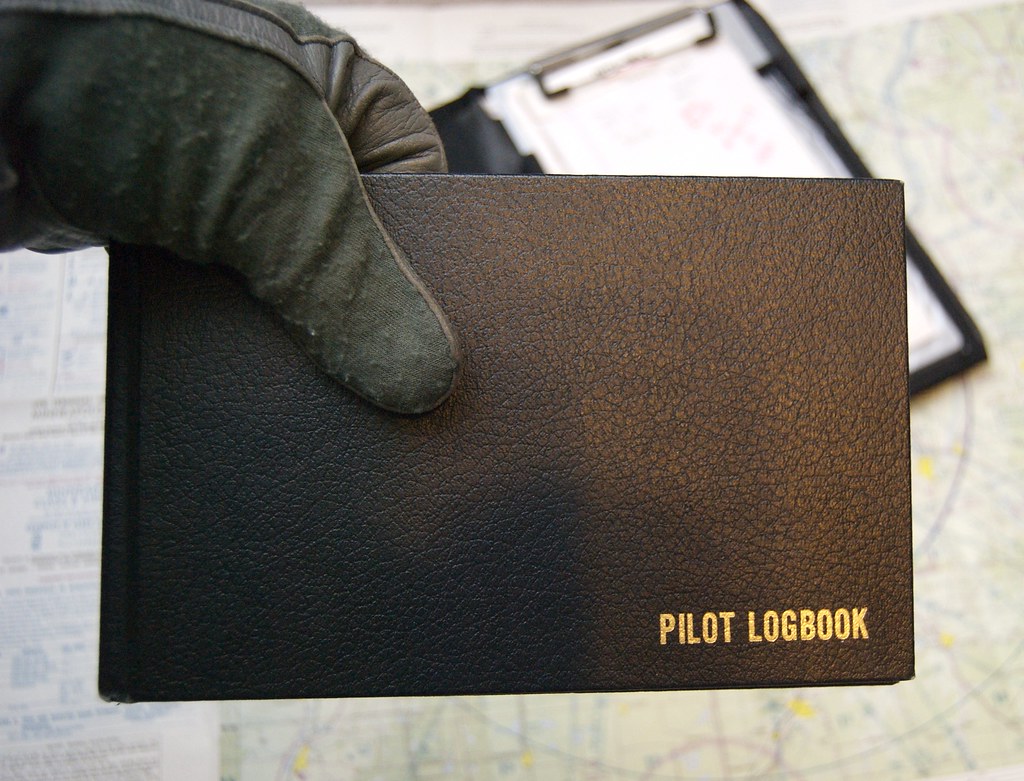
An airline captain who misjudges a descent has a first officer sitting eighteen inches away, watching the same instruments, ready to say something. You do not have that.
In a C172 out of Wilson you are the pilot flying, the pilot monitoring, the navigator, and the radio operator, all in one seat.
There is a name for the discipline of managing that alone, and most Kenyan students have never heard it. It is called Single-Pilot Resource Management, and it is not the same thing as PAVE or IMSAFE.
SRM is not another version of PAVE or IMSAFE
PAVE asks you to rate your risk before you start the engine. IMSAFE asks whether you personally are fit to fly today.
Both are pre-flight snapshots, and AngaBrief's own assessment wizard is built around exactly that structure.
Single-Pilot Resource Management, or SRM, is different. It is not a snapshot, it is what you do with your hands, your eyes, and your attention once the wheels leave the ground and there is nobody beside you to help.
The FAA's guidance on the subject defines SRM as the art and science of managing all the resources, on board the aircraft and outside it, available to a single pilot before and during flight to keep the outcome of that flight in no doubt. It groups the skill into six components: Aeronautical Decision Making, Risk Management, Task Management, Automation Management, CFIT (controlled flight into terrain) awareness, and Situational Awareness. (FAA, Single-Pilot Crew Resource Management)
Put plainly, SRM is what airline Crew Resource Management becomes when there is no crew. Everything a first officer would normally catch, you have to catch yourself.
The Five Ps: a checklist you run in the air, not just before it
The FAA's practical tool for SRM is the Five P checklist: Plan, Plane, Pilot, Passengers, and Programming. You are meant to run through it not once, but at defined decision points through the flight.
Those points are preflight, pre-takeoff, roughly the midpoint of the flight or hourly on a longer one, pre-descent, and just before entering the traffic pattern or crossing the final approach fix. Each pass takes seconds and catches what has changed since the last one.
- Plan: route, weather, fuel, NOTAMs, and whether ATC has changed anything since you briefed.
- Plane: mechanical status, fuel state, and any system acting up since start-up.
- Pilot: this is IMSAFE folded inside SRM, checked again mid-flight, not just on the ground.
- Passengers: nervous, experienced, or a distraction you need to manage.
- Programming: whatever automation or avionics you are using, and whether it has quietly captured more of your attention than the flight itself deserves.
Write PPPPP on your kneeboard if it helps. The point is not the mnemonic, it is the habit of stopping to re-check yourself at fixed moments instead of only when something already feels wrong.
Kenyan trainers give you four Ps, not five
Here is where the American SRM literature stops matching your cockpit. Most of it was written with technologically advanced trainers in mind, aircraft with autopilots, glass panels, and GPS moving maps doing real work for the pilot.
Walk out to a Wilson-based C152, C172, or PA-28 on a typical Kenyan training fleet and you will usually find none of that. Steam gauges, a handheld or panel-mount GPS at best, often no autopilot at all.
That is not a disadvantage you should apologise for. It means the "Programming" P, built around autopilot and moving-map workload, barely applies to you, while the other four carry more weight than they do for a student training in a glass cockpit back in the US.
You cannot hand navigation to an autopilot when the radio gets busy or the terrain briefing needs a second look. Every ounce of task management has to come from you, which makes the discipline of SRM more important in a basic Kenyan trainer, not less.
A worked Four-P pass, Wilson to Naivasha
Theory is easier to skip than a concrete example, so run one. You are mid-flight on a solo navigation exercise, Wilson to Lake Naivasha and back, and you hit your planned midpoint check over the escarpment.
Plan: still matches the brief, no ATC reroute, fuel is where the flight log says it should be at this point. Plane: oil temperature and pressure both normal, no new noises, carburettor heat applied on schedule given the outside air temperature.
Pilot: re-run IMSAFE in your head, not just at the start-up check. Are you still as sharp as you were an hour ago, or has the heat and the workload started to chip at your concentration?
Passengers: none today, so that P is a non-issue and you move straight past it, which is itself worth noticing. Skipping a P because it genuinely does not apply is correct SRM; skipping it because you are rushed is not.
That whole pass takes under thirty seconds once it is a habit. It costs you nothing measurable in workload and it is the difference between noticing a fuel imbalance or a creeping altitude at minute forty instead of minute seventy.
Task management gets tested for real in Wilson's circuit
Wilson is one of the busiest general aviation aerodromes in East and Central Africa, the country's main hub for scheduled domestic flights, air ambulance operators, and most of Nairobi's flying schools sharing the same circuit and frequencies. (Kenya Airports Authority, Wilson Airport)
That mix is a genuine SRM laboratory. On a busy Saturday morning you can have a Cherokee on downwind, a Caravan inbound from the Mara, a helicopter doing pattern work, and a student on first solo, all working the same tower frequency inside a few minutes.
The FAA's task-management guidance boils down to one instruction that matters most here: fly the aircraft first, then navigate, then communicate, in that order, every time. When the radio gets busy, the temptation is to answer it instantly because silence on frequency feels wrong to a nervous student.
Resist that. A late reply is a minor inconvenience; a missed altitude or a wandering heading while you are fixated on the radio is not.
Situational awareness without a moving map
Situational awareness, one of the six SRM components, is usually taught around instruments that most Kenyan trainers do not have. Without a moving map telling you where you are relative to terrain and traffic, you have to build that picture the old way, from the chart, the clock, and the window.
That is a real skill loss compared to a GPS-equipped aircraft, and it is also, done properly, a more durable one. A student who can build a mental picture from dead reckoning and visual references does not lose that picture the moment a screen goes dark or a battery dies, which is exactly the scenario our navigating without GPS piece covers in more depth.
Air traffic control is part of your situational awareness too, and it is a resource many single-pilot students forget they are allowed to use. Requesting flight following, or simply asking Nairobi Approach or Wilson Tower for traffic information when the picture gets busy, is not an admission of weakness.
It is exactly the "outside resource" SRM is named for. (AOPA Air Safety Institute, Managing on Your Own)
CFIT awareness in a country built on hills
Controlled flight into terrain, flying a perfectly airworthy aircraft into ground or high terrain because the pilot's situational picture drifted from reality, is one of the six named components of SRM for a reason. It is not an exotic failure mode; it is what happens when task saturation quietly erodes the one thing nobody else on board is checking for you.
Kenya's training routes are not flat. The Rift Valley escarpment, the Aberdares, and the terrain around Mount Kenya all sit close enough to common training and touring routes that a drifted altitude or a misjudged cloud base is not a paperwork problem, it is a terrain problem.
Our Aberdares terrain-awareness piece goes into the specific hazards of that ground. The point for SRM here is narrower and simpler: catch the drift before the terrain does.
Build a terrain check into your Five P passes, not just your pre-flight brief. A "Plan" review at the midpoint of a Rift Valley crossing that confirms your altitude against the terrain below you costs ten seconds and catches the kind of slow drift that a solo pilot, absorbed in navigation or a fiddly radio call, is otherwise the last to notice.
Building SRM habits your instructor can actually see
SRM is invisible by design, which makes it hard to teach and hard to grade. A CFI (Certified Flight Instructor) cannot watch you think, only what you do with your hands and your radio calls.
Make it visible instead of assuming your instructor knows you are doing it. Narrate your Five P passes out loud during dual lessons, even the boring ones: "midpoint check, plan's still good, fuel's on the right side of the curve, pilot's fine, no passengers, no automation to worry about." A good CFI will correct a gap in that narration far more usefully than they can correct a silent one you never ran at all.
The habit that transfers best from dual to solo flying is the one your instructor watched you build out loud first.
What pilots admit on the forums
Pilot forum threads about single-pilot workload have a familiar shape once you have read enough of them. Almost nobody describes a dramatic failure of skill.
What comes up again and again is smaller: a frequency change missed because a passenger was talking, a checklist item skipped under radio pressure and caught two minutes late, a "why did I let myself get that far behind the aeroplane" moment that resolved itself before it became a story.
The common thread in nearly every one of those admissions is the same. It was never a lack of flying skill; it was task saturation nobody was there to interrupt.
That is the entire argument for taking SRM seriously as a named discipline rather than trusting it to happen on its own. The gap it fills is precisely the gap a second pilot would otherwise have filled.
The Short Version
- SRM is not PAVE or IMSAFE. It is what you do with attention and workload once you are airborne and alone in the cockpit.
- The Five P checklist, Plan, Plane, Pilot, Passengers, Programming, is meant to be re-run at defined points in the flight, not just before start-up.
- Most Kenyan trainers have no autopilot or moving map, which strips out the "Programming" P and puts more weight on task management and situational awareness than the US literature assumes.
- Fly the aircraft first, navigate second, communicate third, especially in Wilson's busy shared circuit.
- ATC is an outside resource you are allowed to use. Ask for traffic information or flight following when the picture gets busy.
- Build a terrain check into your mid-flight Plan review on routes near the Rift Valley escarpment, the Aberdares, or Mount Kenya.
- Narrate your SRM checks out loud in dual lessons so your CFI can actually correct the habit before you fly it solo.
AngaBrief's PAVE and IMSAFE sections give you the pre-flight half of this picture; the in-flight discipline described here is a habit you build with your instructor, not a box the app ticks for you. The go or no-go decision, on the ground and in the air, always stays with the pilot in command and their instructor, never with a tool.
Key Takeaways
- SRM covers six areas: aeronautical decision making, risk management, task management, automation management, CFIT awareness, and situational awareness.
- Run the Five P checklist at preflight, pre-takeoff, midpoint, pre-descent, and before the pattern, not just once on the ground.
- A steam-gauge Kenyan trainer removes the automation crutch the Five Ps assume, so task management and situational awareness carry more of the load.
- Aviate, then navigate, then communicate, is the order that keeps a busy Wilson frequency from eating your attention at the wrong moment.
- Terrain near the Rift Valley, the Aberdares, and Mount Kenya rewards a mid-flight altitude check, not just a pre-flight one.