
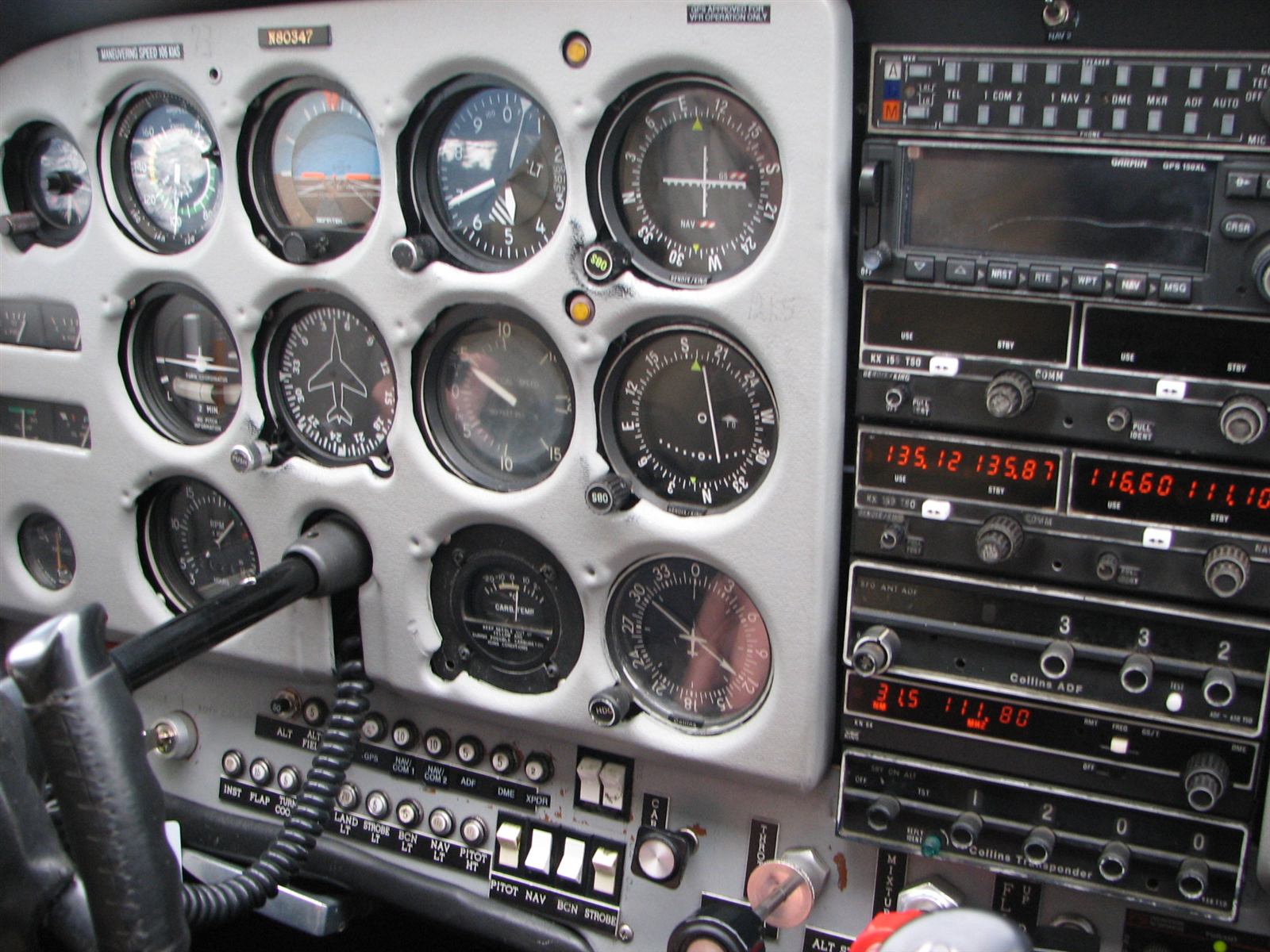
Close your eyes in a slow, coordinated turn and your body will swear you are flying straight and level. That is not a failure of concentration.
It is your vestibular system doing exactly what it evolved to do, and doing it wrong, because it was never built for flight.
Spatial disorientation is the gap between what your senses report and what the aircraft is actually doing. In Kenya that gap gets wider than it does almost anywhere else a pilot is likely to train, because the terrain and the light itself conspire to remove the cues your brain needs.
What spatial disorientation actually is
Your sense of balance and attitude comes from three systems: your eyes, the vestibular organs in your inner ear, and pressure sensors in your skin and joints. On the ground these three systems agree with each other constantly, which is why walking feels effortless.
In an aircraft they stop agreeing. The semicircular canals in your inner ear detect angular acceleration, the start and stop of a turn, not a constant rate of turn, and they cannot detect a steady bank at all once the fluid inside them settles.
The FAA's pilot safety education material on the subject is blunt about the consequence: without visual reference to the true horizon, your inner ear will confidently report an attitude that has nothing to do with the aircraft's actual attitude, and it will keep doing so even as you fight to correct what feels wrong (FAA, Spatial Disorientation). This is why instrument training exists, and why VFR (Visual Flight Rules) pilots who lose their visual reference are flying blind with instruments they were never trained to trust over their own bodies.
The illusions your inner ear produces
Four vestibular illusions account for most of the fatal outcomes, and every one of them feels completely convincing while it is happening.
- The leans. Enter a bank slowly enough, or hold it long enough, and the fluid in your semicircular canals stops registering the turn. Roll back to wings-level and that same fluid movement now reports a bank in the opposite direction, so you feel like you are leaning and want to re-bank the aircraft into the turn you just left (FAA Safety Briefing, Vestibular Illusions). It is the most common spatial disorientation illusion there is, and most pilots who experience it do not realise what happened until they are told.
- The graveyard spiral. A prolonged, coordinated turn stops stimulating your motion sensors entirely, so a gradual loss of altitude inside that turn feels like level flight in a gentle descent. The instinctive correction, pulling back on the controls, tightens the spiral and steepens the descent instead of arresting it, and FAA guidance calls this the deadliest of the vestibular illusions (FAA Safety Briefing, Vestibular Illusions).
- The coriolis illusion. A sudden head movement inside a turn, reaching for a chart or looking down at a knee board, can set the fluid in more than one semicircular canal moving at once, producing a violent sensation of tumbling that has nothing to do with what the aircraft is doing (FAA Safety Briefing, Vestibular Illusions). Pilots have lost control reacting to a sensation triggered by nothing more than looking down at the wrong moment.
- The somatogravic illusion. Rapid acceleration, the kind you get on a go-around or a strong climb-out, is felt by the inner ear as pitching up, which pushes a disoriented pilot to lower the nose into a dive they do not need (FAA, Spatial Disorientation). Rapid deceleration does the reverse, producing a false sense of climbing that invites a stall.
The illusions your eyes produce
Visual illusions do not need cloud or instrument conditions to catch you. They thrive specifically in the low-light, low-texture environment that a lot of Kenyan flying passes through at dawn, dusk, and over open country.
- The black hole approach. A lit runway surrounded by dark, featureless terrain, unlit bush, still water, an unlit escarpment, removes every depth cue your brain normally uses to judge height on approach. The result is a persistent illusion of being higher than you actually are, which pulls the aircraft into a dangerously low, flat approach without the pilot perceiving anything wrong (Cal Aero, The Black Hole Approach).
- The false horizon. A sloping cloud deck, a line of ground lights against a dark, starless sky, or a banked layer of haze can present itself to your eyes as level even when it is not, and the instinct to align the aircraft's wings with that false reference produces an unperceived bank (FAA, Spatial Disorientation).
- Autokinesis. Stare at a single fixed point of light in an otherwise dark visual field, a lone strip light, a star, a distant farmhouse bulb, for more than several seconds and it will appear to move on its own (FAA, Spatial Disorientation). Chasing that illusory movement with a control input introduces a real one.
Why Kenya builds this environment so easily
None of the above is exotic. What is worth naming honestly is how often Kenyan flying sets the exact stage these illusions need.
Fast dusk, then real dark
Kenya sits close enough to the equator that twilight is short and consistent year-round, and the legal definition of night begins 15 minutes after sunset and ends 15 minutes before sunrise. A pilot who has flown at higher latitudes, where dusk stretches out gently, tends to underestimate how quickly a Kenyan evening goes from flyable VFR light to a black-hole environment.
Unlit terrain is the default, not the exception
Outside Nairobi and the coast, most of the country a light aircraft flies over at night is unlit: bush, farmland, escarpment, lake surface. That is precisely the featureless, textureless field of view that produces both the black hole approach and the false horizon, and it is the normal backdrop for a great deal of upcountry and safari-sector flying, not a rare edge case.
Haze compounds it in daylight too
Spatial disorientation is usually discussed as a night and IMC (Instrument Meteorological Conditions) problem, but the arid north and the haze that builds over Lake Victoria near Kisumu can degrade the horizon and terrain texture badly enough by day to produce the same false-horizon and depth-perception failures. The trigger is loss of reliable visual reference, and haze removes it just as effectively as darkness does.
What it looked like in Kenyan airspace
On 13 June 2020, a Leonardo AW119 helicopter, registration 5Y-NPW, operated by Kenya's National Police Service Air Wing, departed Wilson Airport on a multi-sector VFR flight toward Badan Arero. Neither the aircraft commander nor the co-pilot held an instrument rating.
Deteriorating weather forced a precautionary landing attempt near Cyompiou in Meru, and fog closed in as the aircraft descended toward the ground. The crew turned sharply to avoid a mast, the main rotor struck a tree, and the helicopter came down; two occupants were seriously injured and four suffered minor injuries, and there were no fatalities.
Kenya's Air Accident Investigation Department (AAID) found it highly likely that once the crew lost the horizon inside cloud, the resulting attitude changes and turning forces produced somatogravic and somatogyral illusions, disorientation from acceleration and from turning respectively, the same illusion family described above (Kenya AAID, Preliminary Report, AgustaWestland AW119 5Y-NPW, Meru). It is a controlled flight into terrain (CFIT) sequence that began with lost visual reference, not a mechanical failure.
The AAID's finding is a reminder that this is not a hazard imported from FAA textbooks. It shows up in the same skies a Kenyan PPL student trains in, and it is not limited to fixed-wing aircraft.
The numbers should change how you plan a flight
Spatial disorientation accounts for a small share of general aviation accidents overall, roughly 5 to 10 percent by longstanding FAA estimates, but it is disproportionately lethal: that same FAA safety material puts the fatality rate near 90 percent (FAA, Spatial Disorientation). A newer 2025 study from the FAA's Civil Aerospace Medical Institute puts it higher still, at 94 percent, against roughly 19 percent for general aviation accidents as a whole (FAA CAMI, Spatial Disorientation in Fatal General Aviation Accidents).
A related NTSB (National Transportation Safety Board) dataset covering 2003 to 2021 found 367 fatal spatial disorientation accidents, and pilots with under 500 hours were overrepresented in that count. That detail matters directly for Kenyan training: a PPL (Private Pilot Licence) or early CPL (Commercial Pilot Licence) student is, almost by definition, inside that low-hour band, at exactly the point in their flying where instrument scan discipline is thinnest.
What actually protects you
Every piece of FAA and AOPA (Aircraft Owners and Pilots Association) Air Safety Institute guidance on this topic converges on the same short list, and the list is unglamorous precisely because it works.
- Trust the instruments, not the feeling. Once you lose reliable outside visual reference, your attitude indicator is correct and your inner ear is not, every time, without exception. This has to be a trained reflex before it is needed, not a decision made in the moment.
- Recognise the environment before you launch, not during it. Featureless terrain, no moon, haze, an unlit destination strip: each of these on its own raises the risk, and they stack. A personal-minimums check on the ground beats a recovery attempt in the air every time.
- Do not chase a single light. If you find yourself fixated on one point in an otherwise dark field of view, deliberately scan across the panel and back outside rather than staring, because staring is what produces autokinesis.
- Land before last light, not at last light. The margin between "technically still day" and a black-hole environment is short near the equator, and racing the clock to beat it removes the buffer that makes the difference.
- Brief the turn back before you fly it. If you fly VFR toward marginal visual conditions, decide in advance, on the ground, what conditions trigger a turn back, and commit to executing that decision the instant you see them rather than negotiating with yourself in flight.
What instructors are actually teaching, and what they should be
Most Kenyan ground school covers spatial disorientation as a slide deck: name the illusions, define the terms, move on to the next topic. That is not the same as building the reflex.
Here is my honest opinion on it, earned from watching how the syllabus gets delivered versus how the terrain actually behaves. A country with this much unlit bush, this fast a dusk, and this much haze-prone arid country deserves practical, hood-and-attitude-indicator drills on spatial disorientation as a standing item in every PPL syllabus, not a paragraph a student reads once before an exam.
A CFI (Certified Flight Instructor) who has personally demonstrated the leans to a student under the hood produces a pilot who recognises the sensation the first time it happens for real, and that recognition is the entire difference between a scare and a statistic.
What pilots describe on the forums
Spatial disorientation threads on pilot forums have a recognisable shape once you have read enough of them. Almost nobody describes it as a dramatic, obvious event while it is happening.
The recurring theme is the opposite: pilots describing total, calm confidence in a sensation that turned out to be completely wrong, and only realising afterward, from an instrument cross-check or an instructor's intervention, how far off their perceived attitude actually was. That is the property that makes this hazard different from most others in flying.
It does not feel like an emergency while it is happening, which is exactly why the training has to be automatic rather than reasoned through in the moment.
The Short Version
- Spatial disorientation is your vestibular and visual systems reporting an aircraft attitude that is wrong, and it feels completely convincing while it happens.
- The leans, the graveyard spiral, the coriolis illusion, and the somatogravic illusion are the vestibular traps; the black hole approach, the false horizon, and autokinesis are the visual ones.
- Kenya's fast equatorial dusk, mostly unlit terrain, and haze over the arid north and Lake Victoria build the exact conditions these illusions need, in ordinary flying, not rare edge cases.
- A 2020 police helicopter accident near Meru, investigated by Kenya's Air Accident Investigation Department, shows this happening in Kenyan airspace, not just in FAA case studies.
- FAA research puts the fatality rate for spatial disorientation accidents at roughly 90 to 94 percent, and low-hour pilots are overrepresented, which is exactly the population training in Kenya right now.
- The defence is trained reflex: trust the instruments, recognise high-risk conditions before launch, and land before last light rather than at it.
AngaBrief's PAVE assessment prompts a pilot to weigh the environment, including light and terrain, before departure rather than after the aircraft is already airborne into it. It is not a dispatch authority, and it never decides for you; the go/no-go call, and the judgement to trust your instruments over your senses once airborne, always rests with the pilot in command and their instructor.
Key Takeaways
- Your inner ear cannot detect a steady bank and will confidently report the wrong attitude once visual reference is lost.
- The black hole approach and false horizon are visual illusions that need no cloud at all, just dark or featureless terrain.
- Kenya's fast equatorial dusk and mostly unlit upcountry terrain make these ordinary hazards, not rare ones.
- Spatial disorientation accidents are fatal roughly 90 to 94 percent of the time, and low-hour pilots are overrepresented.
- The only reliable defence is a trained reflex to trust the instruments, built before you need it, not reasoned out in the moment.